

Updated: Sep 6, 2023
Brick-evaporative coolers are employed in developing economies as a way to improve the shelf-life of crops without the need of electrical refrigeration. My team's challenge was to improve access to the cooler without compromising its function.
Key Skills: Project Management, Prototyping, Usability Testing, AB Testing
Tools: Google Forms, Microsoft Office Suite, Hand tools (Gloves, Bricks & Sand, Oximeter, Weights)
Timeline: 12 weeks
As team leader, I managed project deliverables, led team-meetings, delegated tasks on a weekly basis, and led interviews with stakeholders.
Process & Results

Usability testing. Courtesy of MIT D-Lab.
Scope
Who
Field workers who don't have access to electrical refrigeration depend on brick evaporative coolers. Placing food crates inside the evaporative cooler meant overcoming the brick wall, usually at hip height. This causes back strain, arm pain, and inefficiency.
Why
A less-painful way of accessing the cooler would allow for more communities to adopt this technology.
How
Over a semester, iterate on existing ideas with a 4-person team and choose an ideal design to recommend for implementation.
Project Overview
Step 1:
Choose best ideas from previous research
Facilitate 2 group meetings
Solicit feedback from 2 class mentors
Discuss technical analysis in all design options
Step 2:
Research solutions with users
Build life-size prototypes
Recruit 6 users of diverse backgrounds
Design research sessions with biometric & qualitative data
Step 3:
Iterate on solutions
Evaluate results with 2 mentors & design reviews
Seek feedback from stakeholder organizations
Modify designs
Step 4:
Research modified solutions with users
Design two-person research sessions with biometric & qualitative data
Step 5:
Present findings to stakeholders
Create 1 hr presentation synthesizing learnings
Review previous research (1 week)
The previous team left ideas to solve the ergonomic challenge based on virtual research during COVID-19.

Designs from previous team (Courtesy of MIT D-Lab)
Complete technical analysis to understand what design would least affect technical performance of the cooler
Secondary research with blog posts, previous research, and ideation around common methods to "take out" crates from spaces
Facilitate group meetings to choose designs
Build prototypes (2 weeks)
Using brick, sand, and crates, I built these three designs in physical form. We decided on a hybrid model due to space constraints, and built to scale to recreate user conditions as accurate as possible.


The resulting model was a hybrid prototype, including the 2 chosen designs and 1 control. User's interacted with noted areas for each prototype.
User Testing (2 weeks)
My team and I recruited 6 volunteers from our class to test out our prototypes.
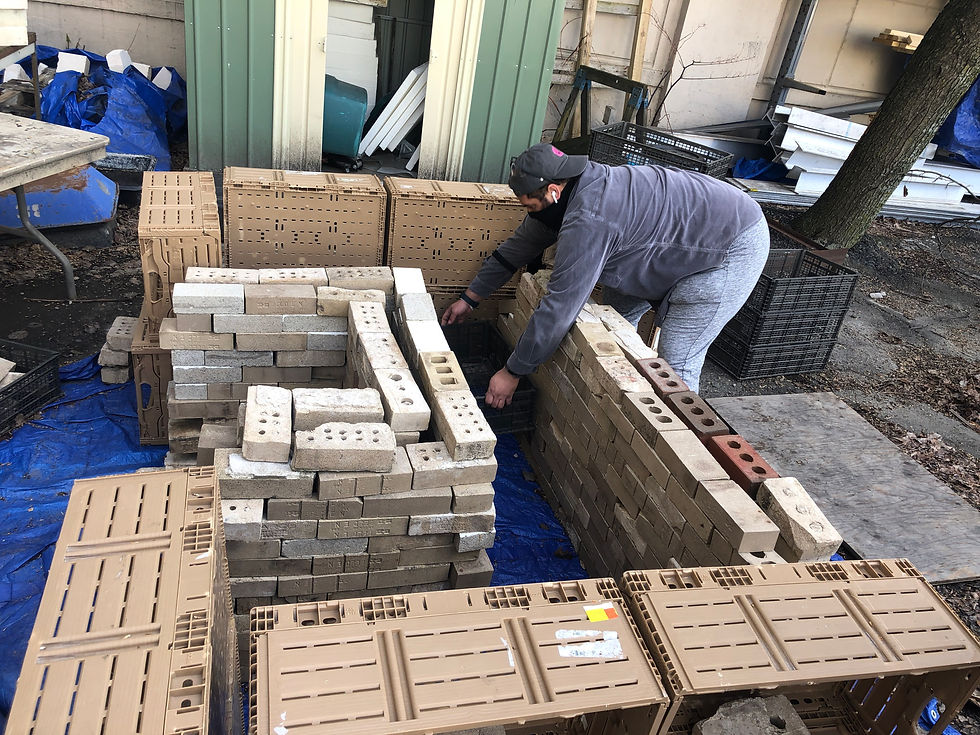

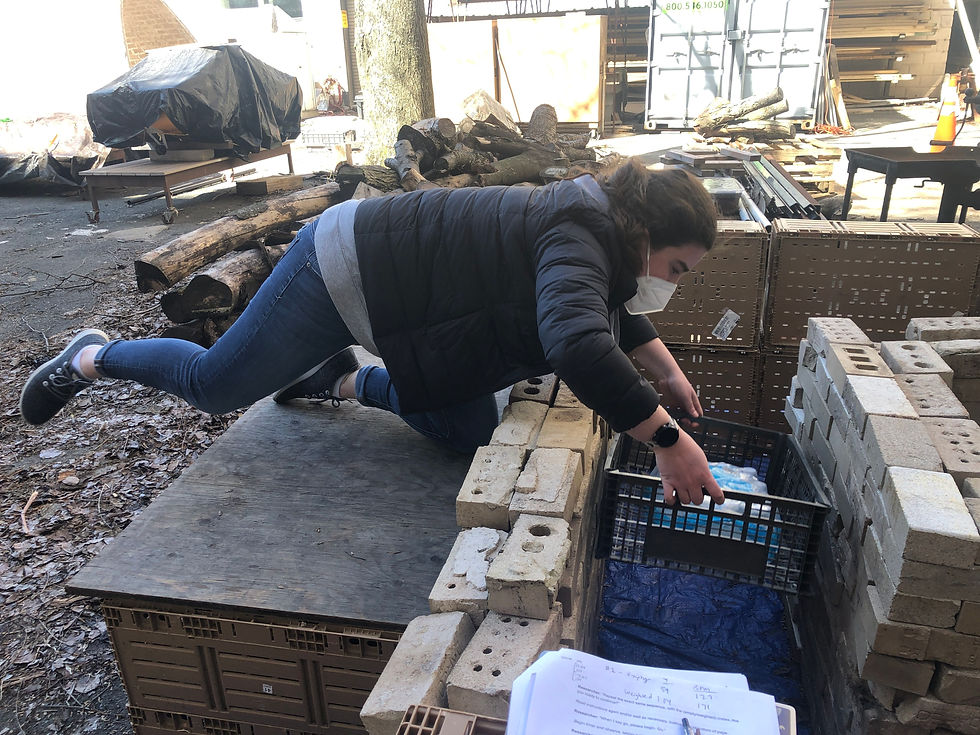
Recorded user test results in paper form, video recordings, and pictures.
Emulated field-settings by replacing food with water bottles and weights.
We chose quantitative metrics such as heartrate (collected by oximeter), the user’s recorded time, and a rating of pain & discomfort on a 5-point scale due to the accessibility of these metrics to distinguish performance.
As team leader, I led user testing and synthesis of qualitative insights.
Which one performed best? (2 weeks)
Our design metrics showed that our “control” was favored in experience. This showed a need to change the ergonomic experience completely by using the cooler in pairs, and adding a new design.

Results of our design analysis
Stakeholder Interview
Interviewed 2 organizations implementing technology in low-humidity environments to understand their thoughts on the changes of the design.
Identified potential in changing the research from 1 to 2 people using the technology, as is often in the field.
Second round of research (3 weeks)
I adapted the research plan to accommodate user-testing in pairs, giving each user a chance to be on the “giving” end of the crate.

Our hybrid model in 2nd round of user testing


Research
Recruited volunteers during a busy time in the semester
Improved data acquisition to a Google Form, so the users could leave qualitative data more easily.
Kept the pictures and recordings to analyze the use of the technology during data analysis.
Final Results & Recs (2 weeks)

Analyzed final results across multiple team meetings
Designed 1hr presentation collaboratively
Reflected on improvements across design of the product, user testing protocol, and how the results could be interpreted in the field.

Thanks to Team Brick, all this was possible!
Updated: Aug 25, 2023
As part of my mechanical engineering capstone, I designed a system for tracking declining respiratory health with four other engineers. My role in the group was researching signal filtering methods, supporting shipping logistics, crafting data collection procedures to minimize error.
Key Skills: Data Acquisition, Signal Processing, Medical Device Design, IRB Process
Tools: MATLAB, LabVIEW
Timeline: 3.5 months

What I Learned
A high-level understanding of the medical device design process - from ideation to sensor acquisition to IRB rights for validation of data.
Signal filtering for EKG signal, experience with MATLAB and LabVIEW interface.
Design of data collection procedures to minimize error.
Process & Results
Scope
Who
Patients with COPD in ICUs, who need their respiratory health checked continuously to detect declining status.
Why
At the moment, there are no known technologies that continuously monitor the respiratory health of a patient. The patient depends on nurses periodically checking the lungs with stethoscope and spirometer.
How
The Medical Device Design Capstone allows for undergraduate and graduate students to work together to solve a medical challenge through prototyping, ideation, and implementation. My team comprised of 4 graduate students, an undergraduate student (myself), and mentors in both academic and medical fields.
We were given the whole semester to create a prototype and a presentation for the class.
Initial Ideation
Partnering with a medical professional at the Brigham and Women's Hospital in Boston, a need was identified for a non-invasive respiratory device that would continuously track the respiratory health without the need of a spirometer.
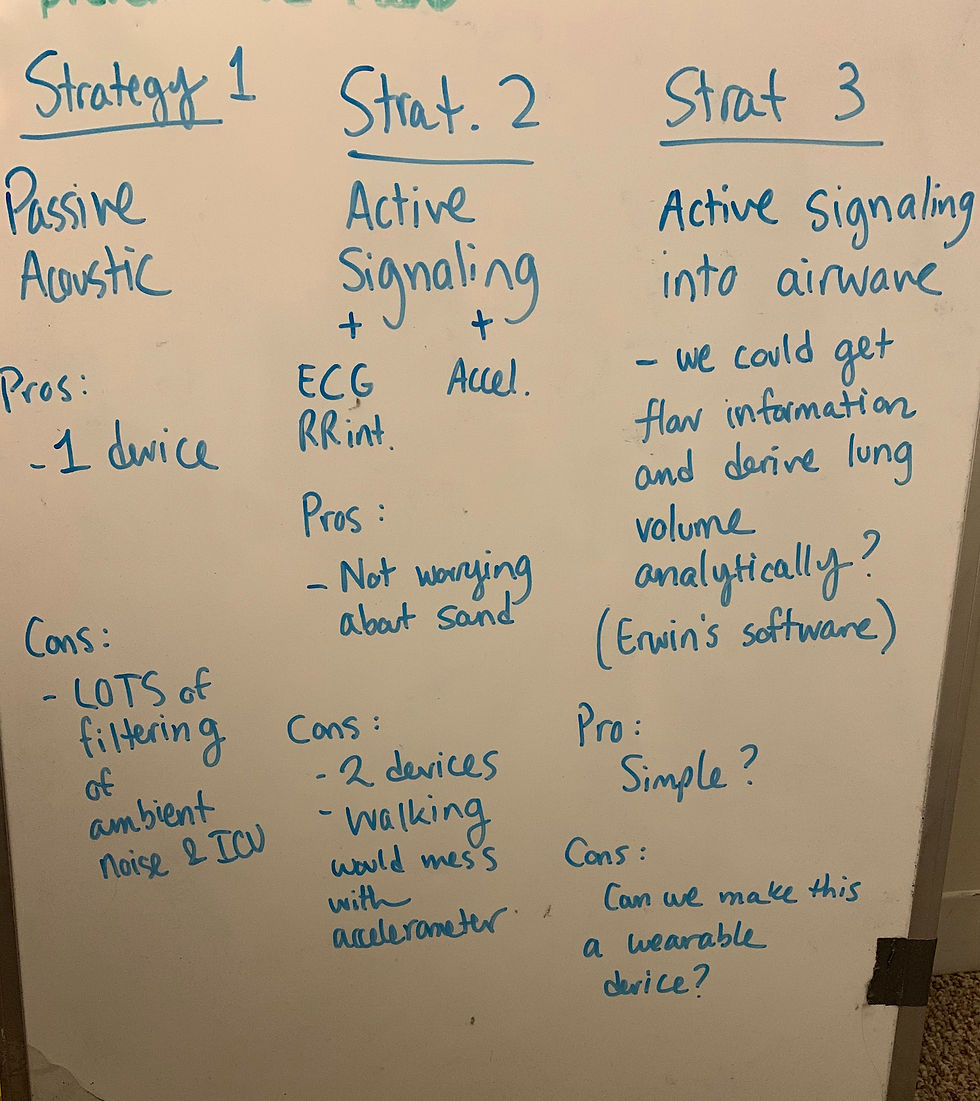
We came up with three possible strategies after ideating through different acoustic (static and active) signals that we could work with. In the end, we decided a passive acoustic signal based on the time and scope of the semester, as well as the tools we could buy with our class budget.
Setting up the experiment
Coordinated purchasing of instruments with class administrator
Kept a budget of our expenses in Microsoft Excel
Took detailed notes during group meetings where design decisions were discussed in detal
Prototyping


Experimental Design
Think about the best way to time various experiments in 1 day, as we had limited time together because of COVID-19 pandemic to collect data.
Because our method depends on acoustic acquisition, chose the appropriate instruments, set-up, and placement on the body to acquire the cleanest signal.
Tools: Microsoft Word, Microsoft Excel, LabVIEW, Spirometer, Stethoscope
I pushed for visual records of what we were accomplishing to be kept in our shared files
Experiment
To validate our set up, we created an experiment with three differing body positions, measuring our biometric signal through all of them.

Academic Writing
My team was encouraged to write a paper with our results and submit to academic conferences
Used Latex to draft, iterate, and consolidate all of our results.
Our paper was published in the IEEE EMBC (Engineering in Medicine & Biology Conference). https://ieeexplore.ieee.org/document/9630839
Clinical Trials Prep
After presenting a successful paper and presentation, the team decided to move forward with implementing the technology in an actual clinical trial, to obtain data better reflective of the potential of the technology.

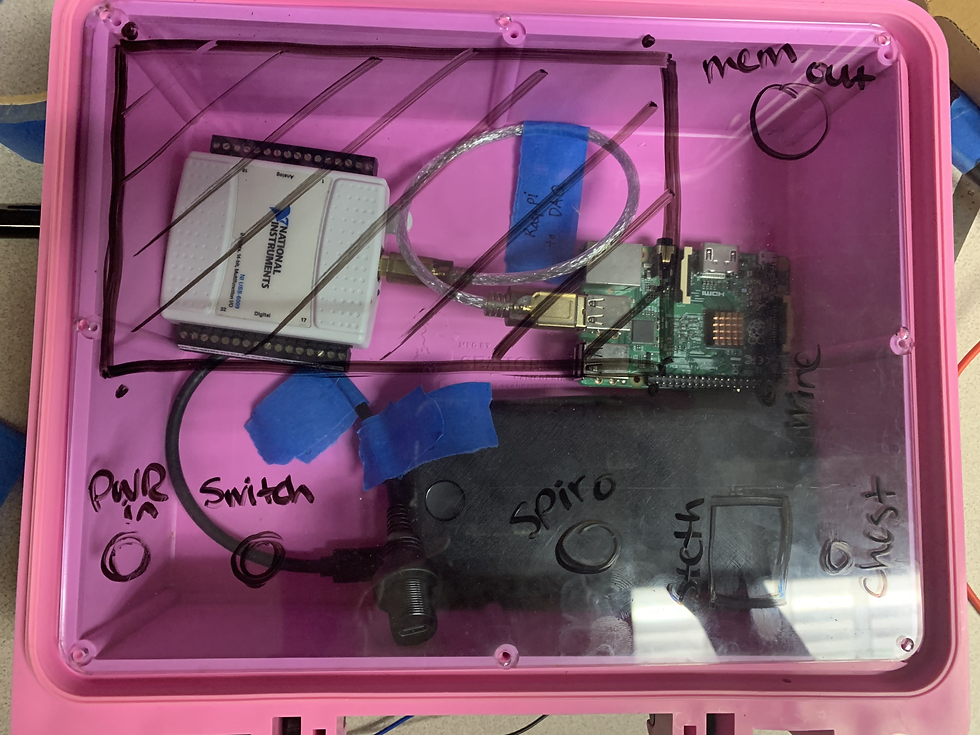
Experimental Design
Deciding what technology would be most accessible to use under ICU context to collect the best data
Spatial reasoning to create a compact & resilient data acquisition box
Communicating with medical mentors to coordinate clinical access & trial logistics
How do we make it more comfortable?
Clinical mentors advised us to explore more comfortable data acquisition methods instead of using a chest belt. One alternative that was suggested was an EKG instead of chest belt to detect the start of inspiration, especially for patients who's COPD would make them sensitive to any pressure around the chest.
Using MATLAB, I achieved a successful filtering technique using EKG signals that captured the movement of the chest that the team may consider integrating in a future, more comfortable design for the user.

Blue: Raw EKG signal. Red: Filtered EKG signal, clearly showing the rise and fall of the chest without noise.

Thank you to Team Lung for this incredible experience!
Updated: Sep 1, 2023
Date: Summer 2020 Design Research Internship
Location: Milwaukee Tool - Milwaukee, WI
Conducted secondary research into the workwear clothing space. Built insights for Milwaukee Tool around modern trends.
Presented key findings to key stakeholders.
key skills:
secondary research | qualitative data synthesis
presentation design | virtual presentation
timeline: 6 weeks
Process:
Scope
Meeting with my mentor, we defined what part of the workwear space to focus on most.
I compiled an outline with initial hypothesis of trends and used it as a guide to navigate the space.
Secondary Research
Categorizing data on MURAL based on initial trends allowed for a visual building of insights


Presenting insights
Centered around how brand could stand out in workwear space
With the help of a mentor, my presentation flow centered around how Milwaukee Tool could set itself apart from traditional workwear brands.
This was based on history of product, market trends, and culture associated with workwear.