Brick Evaporative Cooler
- Aug 11, 2021
- 3 min read
Updated: Sep 6, 2023
Brick-evaporative coolers are employed in developing economies as a way to improve the shelf-life of crops without the need of electrical refrigeration. My team's challenge was to improve access to the cooler without compromising its function.
Key Skills: Project Management, Prototyping, Usability Testing, AB Testing
Tools: Google Forms, Microsoft Office Suite, Hand tools (Gloves, Bricks & Sand, Oximeter, Weights)
Timeline: 12 weeks
As team leader, I managed project deliverables, led team-meetings, delegated tasks on a weekly basis, and led interviews with stakeholders.
Process & Results

Usability testing. Courtesy of MIT D-Lab.
Scope
Who
Field workers who don't have access to electrical refrigeration depend on brick evaporative coolers. Placing food crates inside the evaporative cooler meant overcoming the brick wall, usually at hip height. This causes back strain, arm pain, and inefficiency.
Why
A less-painful way of accessing the cooler would allow for more communities to adopt this technology.
How
Over a semester, iterate on existing ideas with a 4-person team and choose an ideal design to recommend for implementation.
Project Overview
Step 1:
Choose best ideas from previous research
Facilitate 2 group meetings
Solicit feedback from 2 class mentors
Discuss technical analysis in all design options
Step 2:
Research solutions with users
Build life-size prototypes
Recruit 6 users of diverse backgrounds
Design research sessions with biometric & qualitative data
Step 3:
Iterate on solutions
Evaluate results with 2 mentors & design reviews
Seek feedback from stakeholder organizations
Modify designs
Step 4:
Research modified solutions with users
Design two-person research sessions with biometric & qualitative data
Step 5:
Present findings to stakeholders
Create 1 hr presentation synthesizing learnings
Review previous research (1 week)
The previous team left ideas to solve the ergonomic challenge based on virtual research during COVID-19.

Designs from previous team (Courtesy of MIT D-Lab)
Complete technical analysis to understand what design would least affect technical performance of the cooler
Secondary research with blog posts, previous research, and ideation around common methods to "take out" crates from spaces
Facilitate group meetings to choose designs
Build prototypes (2 weeks)
Using brick, sand, and crates, I built these three designs in physical form. We decided on a hybrid model due to space constraints, and built to scale to recreate user conditions as accurate as possible.


The resulting model was a hybrid prototype, including the 2 chosen designs and 1 control. User's interacted with noted areas for each prototype.
User Testing (2 weeks)
My team and I recruited 6 volunteers from our class to test out our prototypes.
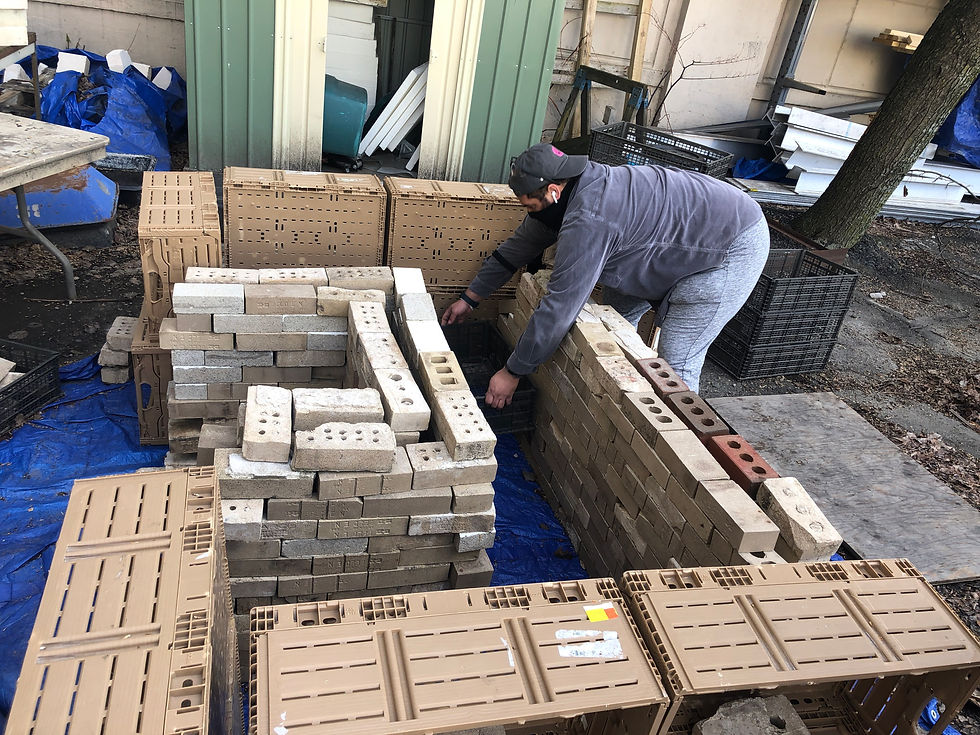

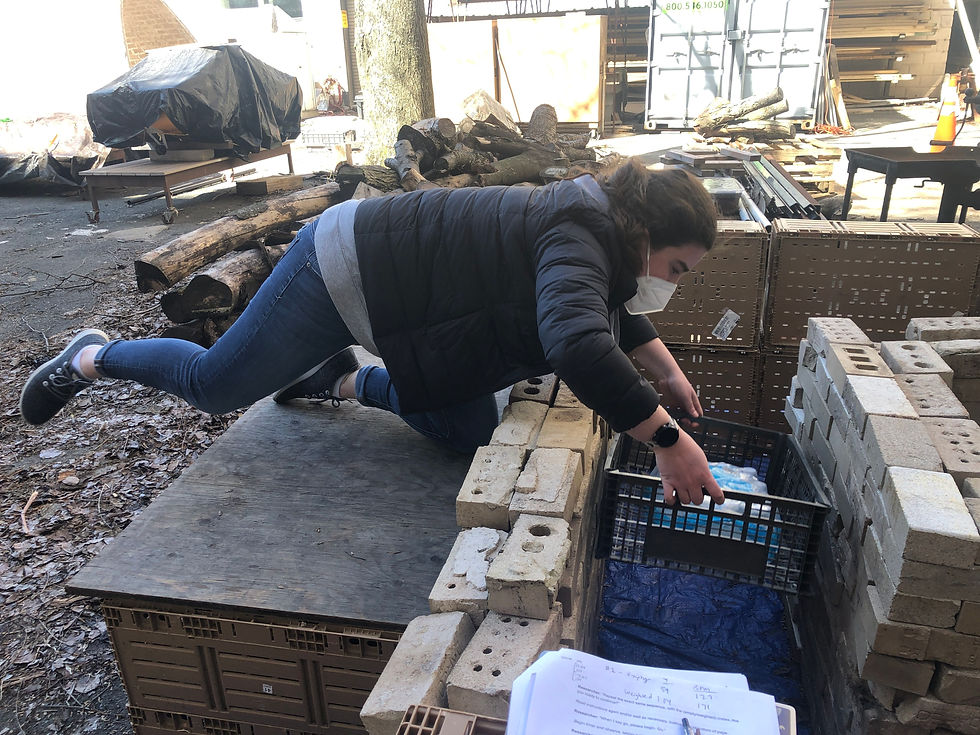
Recorded user test results in paper form, video recordings, and pictures.
Emulated field-settings by replacing food with water bottles and weights.
We chose quantitative metrics such as heartrate (collected by oximeter), the user’s recorded time, and a rating of pain & discomfort on a 5-point scale due to the accessibility of these metrics to distinguish performance.
As team leader, I led user testing and synthesis of qualitative insights.
Which one performed best? (2 weeks)
Our design metrics showed that our “control” was favored in experience. This showed a need to change the ergonomic experience completely by using the cooler in pairs, and adding a new design.

Results of our design analysis
Stakeholder Interview
Interviewed 2 organizations implementing technology in low-humidity environments to understand their thoughts on the changes of the design.
Identified potential in changing the research from 1 to 2 people using the technology, as is often in the field.
Second round of research (3 weeks)
I adapted the research plan to accommodate user-testing in pairs, giving each user a chance to be on the “giving” end of the crate.

Our hybrid model in 2nd round of user testing


Research
Recruited volunteers during a busy time in the semester
Improved data acquisition to a Google Form, so the users could leave qualitative data more easily.
Kept the pictures and recordings to analyze the use of the technology during data analysis.
Final Results & Recs (2 weeks)

Analyzed final results across multiple team meetings
Designed 1hr presentation collaboratively
Reflected on improvements across design of the product, user testing protocol, and how the results could be interpreted in the field.

Thanks to Team Brick, all this was possible!
Comments