In the Heights
- Nov 22, 2020
- 6 min read
Updated: Sep 1, 2023
Location: Cambridge, MA
Date: Spring 2020
With the help of close friends, the Latino Cultural Center put together a production of the musical In the Heights, written by Lin Manuel Miranda. In the Heights tells the story of a Latinx community in Washington Heights, NYC weaved in with homages to immigration, identity, and alegria (joy). My role as artistic director was to lead artistic vision, bring together a team of artistic staff, aid producers in obtaining funding, and shape all acting rehearsals.

What I Learned:
The importance of a cohesive artistic vision from staff at the beginning of an artistic (or any) project
The importance of asking for mentorship when embarking on a new, complex project
Teaching a "feeling" during rehearsal
Building relationships with the cast as a director
The joy of Latinx representation!
Our performance was cut short by COVID-19 MIT evacuations two weeks before our performance. To honor our work, we held an informal run-through the day before we left campus. Read more about the experience here: https://mitadmissions.org/blogs/entry/a-last-minute-rehearsal/
Here are some rehearsal videos from the experience:
Inspiration
I have loved Lin Manuel Miranda's work for a very long time. During the peak of Hamilton, the musical he wrote about Alexander Hamilton tumultuous life, I performed as "Hamilton" for my high-school show choir by rapping "My Shot". The lyrics about perseverance and resilience appealed to me in a very personal way.
My dream soon after was becoming involved in an In the Heights production at MIT. However, there was always the issue of Latinx representation - were there enough students at MIT who identified as Latinx and wanted to perform to put on In the Heights? Theater groups on campus grappled with this question and hesitated proposing musicals that focused on narratives from communities of color because of the lack of diversity in existing pool of actors. However, the more I performed with musical groups, I looked around and realized a number of my close friends both were Latinx and involved in music. We often bonded over our love for In the Heights, showering each other in excitement about how the musical captured a part of ourselves. So I proposed starting our own production.
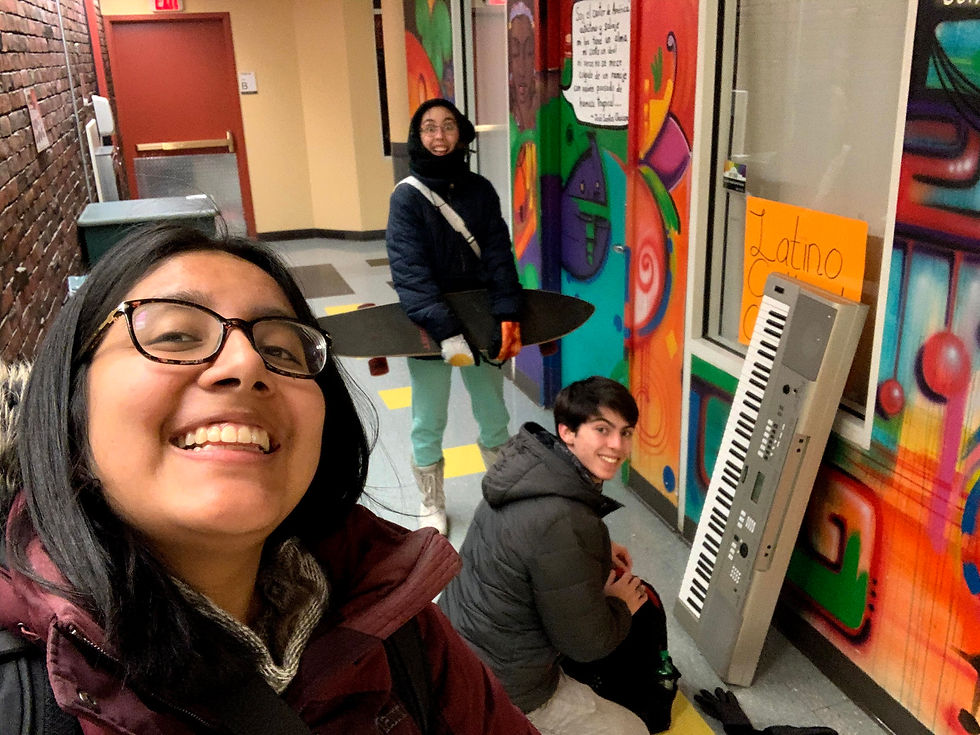
Music director Diego Barea and Producer/Actress Natasha Stark after our last night at auditions.
Cohesive Scope
The planning for this production started January 2020 while I was traveling with MIT Global Teaching Labs in Israel-Palestine. Thus, communication among the planning committee occurred across erratic time zones - impeding us from coming together in the same room and defining a cohesive scope for the performance. We realized one-month in, rehearsals well under way, that we all had differing ideas of how big or small we wanted the final performance to be. Our bandwidths were also different. Looking back, having a clear and candid conversation at the beginning of the year to define our scope would have saved us miscommunications later on. Nevertheless, during this time we did our best to communicate deadlines, deliverables, and artistic choices through text, email, and late-night/early-morning calls.
Hitting the Ground Running
When choosing the date of the performance, my team agreed that performing for the incoming Latinx students during Sin Limite, a fly-in program for adMITted Latinx students, would be amazing. That gave us 1.3 months after auditions to put on our performance. I flew back from the Middle East to campus on February 4th and hit the ground running with planning auditions, gathering publicity materials, organizing team meetings, and most importantly reaching out to the Latino Cultural Center and Latinx community for support.
Expectations and Asking for Help
The excitement over the project was the most fulfilling part about directing this production - the cast was always talking about it, and as far as I know, it was the first time the Latino Cultural Center had engaged in theater since the existence of Teatro MIT, the Latinx centered theater group on campus that shut down in 2012. After many generations of Latinx students, this was a chance for the community to rise up and show our presence to the rest of campus, loudly and boldly. And so, because In the Heights was a conglomerate of firsts, it also came with a conglomerate of expectations.
We wanted to do an amazing job. We wanted for our voices to be heard and for our presence to be felt powerfully through this art form. But as director, I realized well into the production that we had no adult mentor. As a team, we tied in all our theater knowledge together, like a lattice of wisdom about deadlines and methods for engaging the cast, organization, etc. But there were so many gaps - how do we hold challenging conversations around Latinx representation? As I painfully learned, a Latinx production will not hold a monolithic perspective around what it means "to be" Latinx, even when most of the artistic staff identifies as Latinx. How do we figure out copyright challenges? And personally, how do I manage and communicate effectively with a team of actors? I had observed directors many times in their work, but accomplishing that task myself was a very unique challenge fit to my own inhibitions. I needed a mentor. We did receive support from the Office of Minority Education but that came later in the production, when the situation was more critical and I reached out to a trusted leader. This is why a large part of what I am taking away from this project is the need to lean on a mentor when engaging with a new project. Directing a team of 15-20 actors and producers and designers was no easy feat for one person to do on their own - it escapes me how I didn't really think of asking for help as an option at the beginning.
COVID-19
On March 3rd, we received notice that MIT was going to cancel fly-in programs and move classes virtually. That night, In the Heights team gathered in a conference room in one of the dorms and talked candidly about what our next steps would be. There were rumors that our performance would be completely cancelled because no crowds were allowed to gather anymore. Diego foreshadowed that we probably would be leaving to our homes the following week. We agreed that we would continue our production until we got a confirmation that this was the case.
On March 10th, we received final confirmation that MIT was evacuating all students in one week. As a team, we hurriedly took the time to decompress, spend time with all our loved ones, and say painful goodbye to seniors. But as that Friday approached, the cast asked if we could please meet one last time before leaving campus. We decided to host an informal run-through in one of the empty classrooms of what we had worked on thus far, and invite some of our closest friends as the audience.
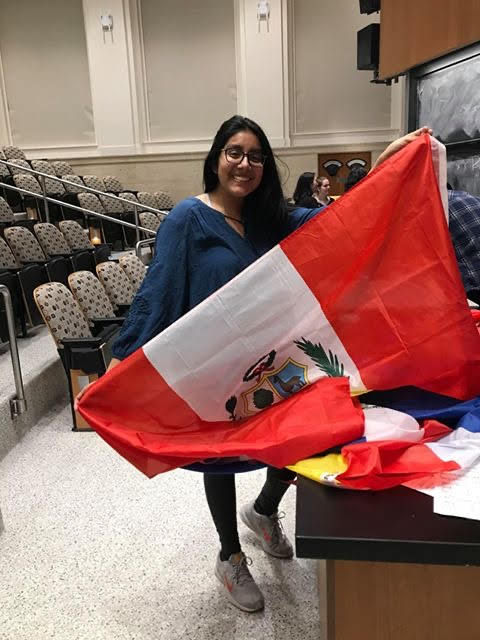
That memory is one of the dearest I hold in my heart. I gave a welcome speech to the audience in the room, asking them to please hold this space as one of celebration and beauty, a shelter from the chaos and uncertainty ensuing outside. The run-through was a success. Most of the cast actually remembered their blocking (!!!) and the show, with a few gaps in between, was basically whole. Lots of laughter and dancing. I sat on the front row with the co-music director, Lani, arms around each other, crying and laughing and celebrating the production everyone had created.
In Summary
Pursuing a long-time dream, I initiated & directed an MIT In the Heights musical theater production with the help of close friends. Our team, around 20 artistic staff and actors who mainly identified as Latinx, independently obtained rights, raised money, ran rehearsals, outreached to performers, and built an artistic vision to powerfully raise the voice of the Latinx community on campus. Our performance, while cut short by COVID-19 evacuations, still culminated in a heart-warming informal run-through.
I take many lessons from In the Heights, a couple of which are the importance of a cohesive artistic vision and seeking mentors before engaging in a challenging project.
Thank you to Natasha Stark, Diego Barea, Vanessa Gonzales, Kiyah Willis, Jose Zavala, all of our wonderful actors and the rest of the artistic staff who helped make this production a possibility.
Comments